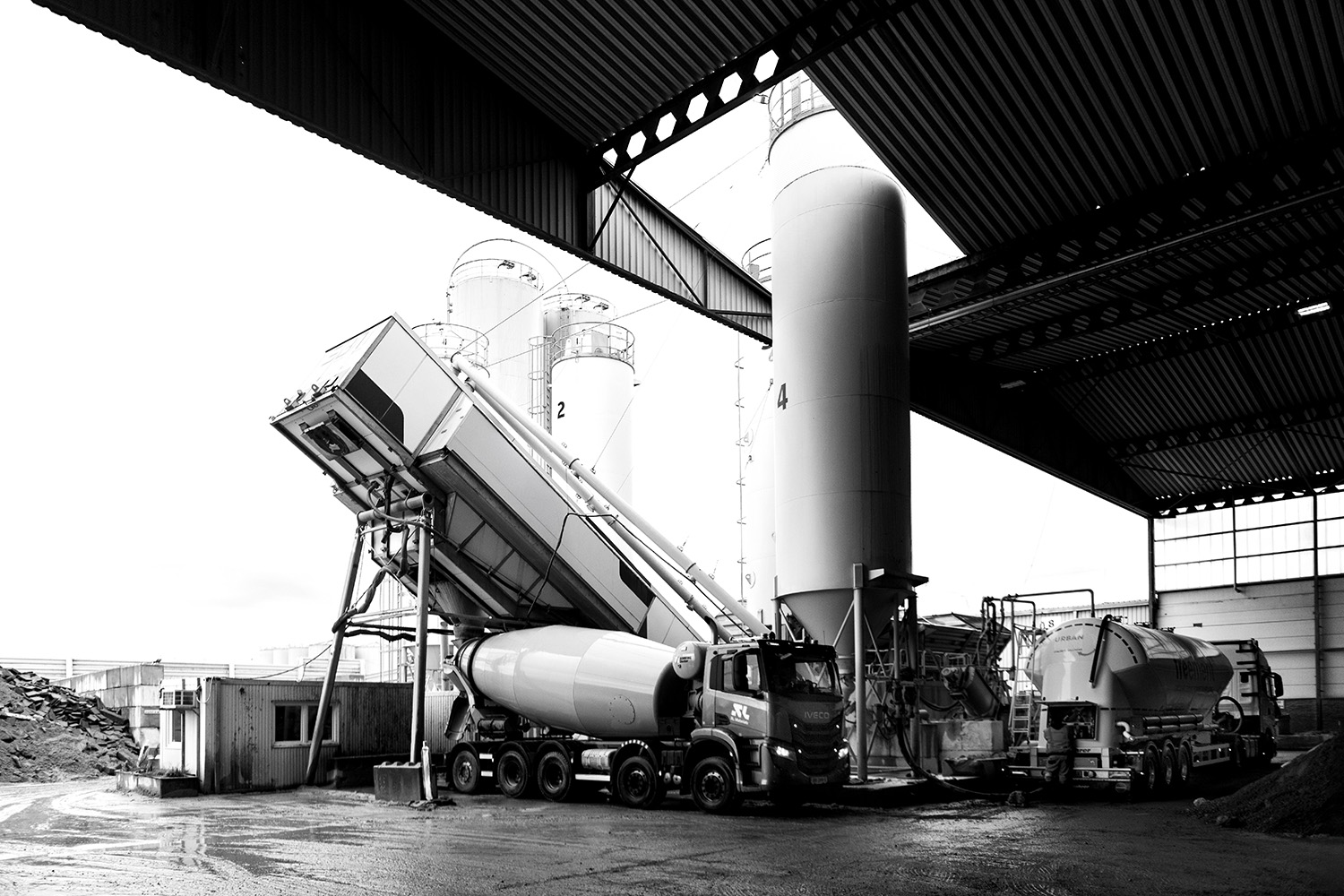
Closing the loop begins in the built environment. Using our innovative techniques, we determine the quality of the concrete before demolition even begins — guaranteeing the highest-quality recovered material. With our Smart Liberator, we liberate the original raw materials: sand, gravel, and cement.
Thanks to a unique process of crushing, sieving, and advanced refining, we produce circular raw materials that are technically equivalent to primary materials. The result? Liberated Concrete: circular concrete with the same certifications and performance, and a fundamental impact on the world.
Many people assume that circular concrete involves a compromise. It does not. Liberated Concrete performs equally to, or better than, traditional concrete and is produced in compliance with applicable laws and regulations.
The difference lies in the origin. The sand, gravel, and cement in Liberated Concrete come largely from existing concrete. This reduces the demand for new extraction and new cement production, step by step. We build without further depleting the earth and without the CO₂ emissions associated with producing traditional cement. Quality need not come at the planet's expense.


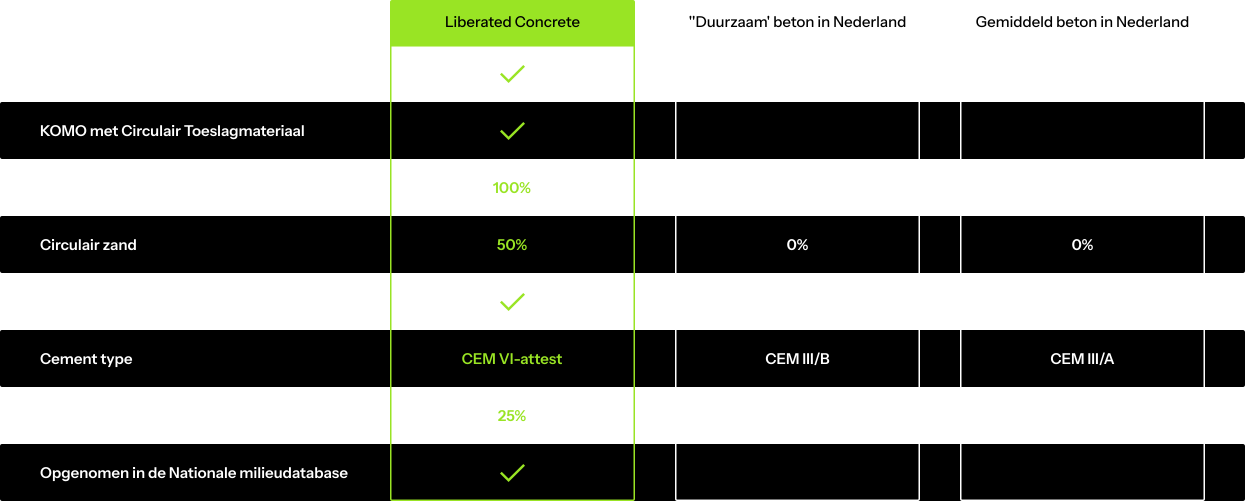
A fair comparison requires fair criteria. Below, you can see how Liberated Concrete compares to conventional cement and common alternatives.


Circular gravel, recovered from demolition rubble rather than quarried from the ground. Gravel is a finite raw material and quarries often leave deep scars on the landscape. Freegravel breaks that dependency: the same strength, without new extraction.


Circular sand, recovered from demolition rubble rather than quarries, rivers, or seabeds. By liberating concrete into its original components, we recover sand that has already done its job and can do it again. No depletion of natural reserves, no ecological damage to vulnerable areas.
.svg)
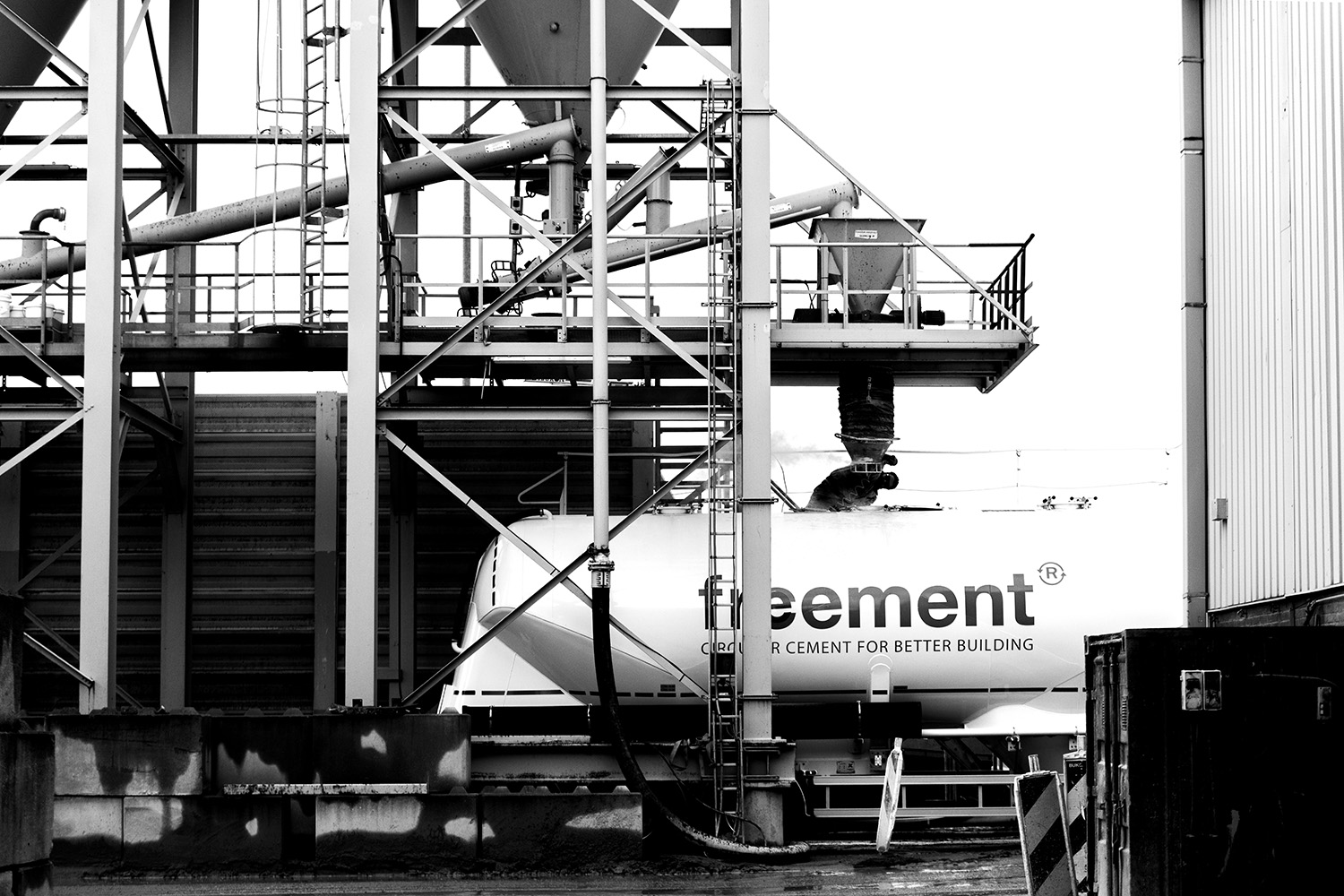
Circular cement — the heart of Liberated Concrete. Cement production accounts for the largest share of concrete's CO₂ emissions. Freement replaces traditional Portland cement with liberated raw materials from existing concrete. It is comparable in performance, fundamentally different in impact.
.svg)
Our projects and publications. This is how we bring Liberated Concrete® to life.
Find the answers to frequently asked questions here.

Yes. Liberated Concrete is certified for both quality and sustainability and complies with applicable laws and regulations. It performs on a par with traditional concrete — and sometimes better. Would you like to see the specific certifications? Please get in touch.
Liberated Concrete is made up of three Smart Liberated Materials: Freement® (recovered cement, available in fine and coarse), Freesand® (circular sand) and Freegravel® (circular gravel). Each of these raw materials is technically equivalent to primary materials.
The material is suitable for all applications. Think high-rise, tunnels, viaducts, bridges, prefab and other concrete structures where traditional concrete is normally used. Not sure whether it is right for your project? Get in touch — we are happy to advise.
Compared with traditional concrete, Liberated Concrete achieves a CO₂ reduction (GWP) of 63% to 80%, depending on the reference concrete. The environmental cost indicator (MKI) is also significantly lower. We have an EPD for each mix in accordance with European standard EN 15804, available on request via our contact form.
Yes. Thanks to our EPDs and certifications, Liberated Concrete can be clearly substantiated in tenders where circularity or CO₂ reduction counts. We are happy to help with the right documentation. The earlier you involve us, the more value we can create together. Please get in touch.
Talk to us about circular concrete, a tender, a collaboration, or simply ask our team a question. We are ready.

.svg)